

Joseph Campbell Interview: Living Myths (Parabola, 1976)
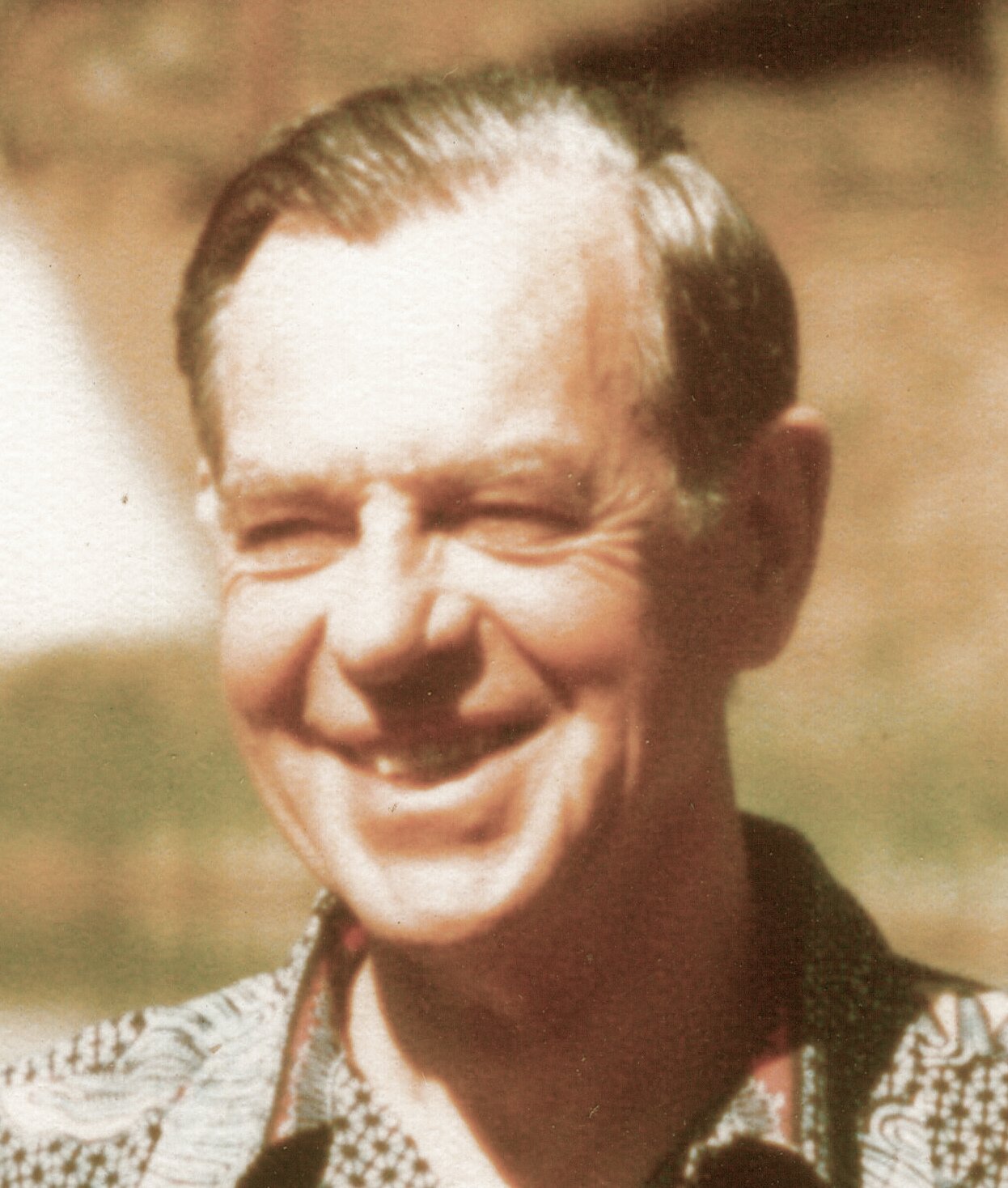
Joseph Campbell at Feathered Pipe Ranch, Montana, in the late 1970's. Photo: Joan Halifax
Living Myths: Joseph Campbell in Conversation with Lorraine Kisly (Parabola, 1976)
In the spring of 1976, the mythologist Joseph Campbell sat down with Lorraine Kisly — editor of Parabola and later the founding publisher of Tricycle: The Buddhist Review — for a wide-ranging conversation about how myths endure and how they are lived today. It appeared in Parabola's second issue, "Magic." Campbell was seventy-two, and speaks here with the candor of someone long past needing to impress: on the four functions of myth, on why a Westerner cannot simply become a Hindu, on losing one's faith "without losing it," and on the inward turn he saw happening all around him.
Campbell has meant a great deal to me over the years, and this interview is one I return to. I've reproduced it here because it deserves to be read whole. If you'd like, you can also read my favorite Joseph Campbell quotes, gathered from across his work.
— Roderick MacIver
In his seventy-two years, Joseph Campbell has been a teacher, author, lecturer, and editor. But most of all he has been an explorer, searching the great myths and legends of all cultures and times and finding in each a source of delight, illumination, and instruction. Even in his scholarly four-volume work, The Masks of God, Campbell resisted the temptation of simply cataloguing and describing the riches of world mythology. For him the vitality of the great traditions springs from their immediate and perennial relevance to the human condition. They are maps leading to the treasure of man's deepest spiritual potential — and in his search he has discovered for us ways in which we are all characters in the mythic play.
Tall and thin, graced with an Irish gift for story-telling, Campbell's quiet geniality is animated by an unquenchable wonder at the richness of our mythological inheritance. Moving easily among sources as diverse as James Joyce and Buddhist Sutras, Native American traditions and C.G. Jung, he is exhilarated by finding fresh parallels of theme and meaning. He invites all of us individually to strike out on our own inward journeys, guided by the wisdom of those who have travelled to the heart of things and returned to tell the tale.
— Lorraine Kisly
Lorraine Kisly: In trying to assess the role of mythology in our lives now, would you say that mythology is as much a part of human life as it was in the past? Are we simply not aware of it?
Joseph Campbell: We're aware of it but we don't interpret it as mythological. Just consider the trouble spots in the world today and what's behind them. First, there's the conflict in India between Hinduism and Islam that goes on and on. These are two great mythological structures — the mythology of Islamic monotheism and Hinduism, which is perhaps the oldest high culture tradition still functioning in the world. Moving further west, you find peoples whose sense of a right to a particular land cannot be explained in purely political or social terms. And right here in the Christian sphere, you find Catholic and Protestant readings of a single mythological tradition causing seemingly unending difficulties in Northern Ireland. So in terms of its activity in the contemporary world, mythological collisions are crucial and immensely important. But in this modern world, these contending mythologies are playing an outworn game. They have very little relevance to the real problem of contemporary life, which is to recognize that we're all passengers on the same "spaceship earth," as Buckminster Fuller called it. These in-group out-group attitudes of retaining love and admiration for your own group and projecting disdain and aggression outward are archaic attitudes.
Kisly: But still very much alive.
Campbell: They are alive. I see more and more all around me a proliferation of these in-group definitions where people find a group to align themselves with and, in that relationship, hold themselves against others. Social problems are not very comfortably solved in that way.
Kisly: Would you define these kinds of things as myth?
Campbell: They are definitions of the social field, within which the emotional system is then shaped to an in-group out-group mythology. Now that is a mythological theme. I've described in my books what I call the four main functions of myth. One is the mystical function of opening the mystical dimension. The second is the cosmological function of relating us to the cosmos as now known in such a way that its mystery can be experienced, that we can relate to it with gratitude. After all, myth has to do with attitudes. Third is the sociological function of validating and maintaining the moral or ethical system of the specific social group to which one belongs; so that when you define your social group you define the margin of your mythological identification. And finally there is the pedagogical function of mythology, of carrying the individual through the crises of life from dependency in childhood to maturity and the realization that one is a self-responsible individual, and then on to disengagement from society, which comes in the later years of life and forward, to the ultimate threshold of death. So there are those services which myth supplies.
Kisly: I suppose you've answered the question of how mythology is alive in our own times in terms of the third or social category. Is it as much a part of our lives in the first two, the mystical and cosmological functions that you've described?
Campbell: Go to any church or synagogue and you'll find the clergy there trying to support an archaic concept of the universe against the findings of science. Religion has been kicking against the findings of science ever since Hellenistic times. Just think, the first chapter of Genesis was composed at a time when the Greeks had already measured the circumference of the earth to within a couple of hundred miles. It presents a deliberately archaic notion of the shape of the cosmos and the way in which the cosmos came into being, and then the religious system is hung onto that belief. Now, the individual has to feel comfortable in his universe, religiously comfortable as well as physically, and if the religion does not relate one to the universe as it is, but is fighting against it — what does the individual do?
Kisly: Is there a way in which evolution can be seen as a myth itself?
Campbell: Well, evolution is a scientific finding to which the mythology must adjust itself. And if it isn't adjusted to it there is a stress between the mythological or religious and the actual experience of the world which people are having to take account of these days. The findings coming through now about the antiquity of the early hominid type, putting the date back nearly four million years, give a different notion of the place of man in nature from the one that would have us all created together with the world in 4004 B.C. And look at these galaxies beyond counting that the scientists are showing us — literally millions of galaxies, every galaxy a milky way of stars, every star with a possible solar system around it, some of them probably inhabited. What does that do to the whole history of creation and the fall that we have in our inherited tradition? It just breaks it up.
Kisly: In showing ways that mythology is alive in us, you seem to have shown that it is alive in a different way, a less connected way than it was in the past. Mythology before, in certain cultures and traditions, instead of dividing all the time, seemed to feed people and support them and fill their lives. And in that sense, we don't really have a mythology.
Campbell: That's right. The basic mythology of the high literate civilizations, from the first emergence of such civilization in Sumer during the fourth millennium B.C., was concerned to coordinate into a single organically conceived social unit the disparate types of men functioning in that developed world. When the cities began to evolve with specialized vocations, the problem arose of coordinating these disparate types of human life. This was done with the mythology of the social unit as an organism, put in accord with the cycles of the seasons, as our ritual festivals still do — Christmas and the Festival of Lights at the winter solstice, spring festivals, fall festivals. All of the basic mythology put the society in accord with the world of nature, and then the individual, who was also a product of nature, was put in accord with nature through participation in those rites. Well, now that's blown apart. We don't have that same unity anymore. The roles that people play in the world now are far more various than they ever were in traditional society, and the individual has to find his own way. We are much more freely choosing, self-responsible individuals. That brings a whole new problem.
Kisly: I remember reading that at one point you had studied Eastern tradition and culture for so long that you "almost felt like a Hindu."
Campbell: Until I went to India.
Kisly: There are many people in America today who feel themselves to be Hindus or Buddhists. Do you think it is possible for them really to be a Hindu or a Buddhist?
Campbell: No. Absolutely not. In the first place, Westerners do not usually have much contact with these traditions until they are already at least adolescents — sixteen, seventeen, nineteen years old. So they've had at least fifteen years of the building of an occidental psyche. In the Orient, one's duties are put upon one. One is not a freely choosing individual, and the whole accent is on ego-suppression, ego dissolution. The ego, you see, is not the "I want," but the "I judge" and "I accept" and "I take the responsibility" principle — and that is just what you do not have in the East. If one were an Oriental, one might have a very fragile ego, like a hollow glass sphere. The guru has a little tack hammer and he hits that glass sphere and it cracks. The ego never was much developed, and now you see it go with pleasure, in the sense of release from a burden. But the Westerner goes with this hard rock of an ego, a sort of living organism of an ego, and it does not crack when hit with the little hammer.
Kisly: So that Westerners who identify themselves as Hindu are in danger of getting themselves further into confusion when they try to put the tradition on whole.
Campbell: I would define the great value of the Oriental instruction for us as this: the translation of mythological symbols into psychological references. We have read our own mythological symbols as historical references — Moses on the mountain, the parting of the Red Sea, the Virgin birth, all read as historical facts. The same symbols come to us from the Orient, read however as having psychological reference, representing powers within the human spirit which are to be developed and can be evoked by contemplation and meditation on appropriate symbolic forms. The symbols then point to things that are in ourselves. But then you go and take over, also, all their old archaic sociological problems. You dress like a Japanese or a Hindu. So you are deracinating yourself — not reading the message in terms of your own condition, but trying to change your condition, and it just doesn't work. Very seldom does it work, and only in the most sophisticated people.
Kisly: Many people who are attracted to the study of myth and tradition sense a meaning and truth in them and are then faced with the problem of relating that truth to their own life in a practical way. Do you think that can be done without a guide of some sort, outside of a tradition?
Campbell: I never had a guide! The material in itself, if one gets into it, is guidance enough. Now, an important point is that all the old, historically-grounded traditions were rendered effective through rituals. Rites are the enactments of myths, and by participating in the rite one is participating in the myth, and consequently activating the accordant structures and principles within one's own psyche. Without some kind of ritual enactment, the whole thing fails to get inside the active aspect of one's system — unless one happens to be working through actual life problems in terms suggested by mythological considerations.
Kisly: Without that participation, you are saying that Western man outside of a tradition must try for himself to apply the content of myth to the process of his own psyche.
Campbell: You see, I was brought up a Catholic, and I was a good practicing Catholic until I was twenty-four or twenty-five. Every week I would go to confession, and before going I'd examine my conscience — think of all the negative things I'd been guilty of. Why in heaven's name not think of all the great things one has done, the good and lovely things, and forget the others? Dragging those up and meditating on them turns one into a worm. If you do something ghastly you don't have to go to confession about it — you know what it is and it's hitting you in the face all the time.
Kisly: I was also brought up in the Catholic tradition, and in spite of negative aspects like that, I've always felt grateful to have been exposed to the rituals and sacraments as a child. It seems to open one to mystery and paradox.
Campbell: I would say that also. The problem, though, is to lose it without losing it. When you find you have lost your faith, then you've lost the imagery that connected your conscious life with the deepest spiritual potentials within you. So my belief is that one shouldn't throw these things out, but reread them so that they have valid spiritual rather than impossible historical references. And then it all comes to life again. The Catholic myth, after all, is indeed a rich and beautiful one.
Kisly: Do you think that each tradition has within it, at least potentially, all the dimensions of truth contained in the other great traditions, or are there significant esoteric differences?
Campbell: There are significant differences. Take Judaism and Hinduism — these are ethnic religions; one is born a Jew, one is born a Hindu. Christianity, Buddhism, and Islam are credal religions — credo, "I believe" — and one's birth has nothing to do with it. That's an important difference, psychologically and historically. Yet each of these world religions is exclusive in its own way too: there are adherents of the faith and there are those outside. So in a contemporary world, they are a bit outdated. The most recent big thing that has come along is communism. It has all the signs of a functioning mythology except one — and that one is the most important of all: a sense of the mystery dimension of the world and of all things. Communism is impudent with respect to mystery. It foresees only one society and the triumph of that society over the whole face of the earth. It has a book venerated as a kind of revealed bible, saints of the tradition who are embalmed and are its true interpreters, images of its leaders everywhere. It has everything except the mystery dimension — it tells you what to do and what to believe in every detail. I see it as a completely reactionary system, totally eliminating individual experience.
Kisly: I remember something you wrote in The Hero with a Thousand Faces — that it is only those who know neither an inner call nor an outer doctrine whose plight is truly desperate. Today, that includes most of us, and you see communism coming along as an outer doctrine.
Campbell: That's exactly right.
Kisly: Twenty years ago you had a question about Spengler's view that our culture was in its declining phase. How do you feel about him today?
Campbell: He's working out almost on schedule! It's fantastic. I used to have a question about it, but not anymore. The only question, and this is a big one, is whether the industrial revolution is a world phenomenon or an occidental one. Will this great new heritage of man finally dissolve away as the building of the pyramids did when Egypt lost its power? Or is it something that can be fundamentally assimilated to the consciousness of global man, so that we move into a new world phase? Are we entering the phase of no more horizons — the true post-agricultural phase of human society? This "airport civilization" putting down its centers all over the world — is it something that will fade, or something that will be carried on?
Kisly: You are not, obviously, looking at the future in terms of an either/or — a great new age or the destruction of the planet. You see the possibility of simply breaking up into small groups again.
Campbell: Yes, and I think that's more likely than total destruction. People are afraid of the unknown, and the "whole-world" step is a kind of free-fall into the future.
Kisly: How would you describe the difference between your approach to the study of mythology and that of Lévi-Strauss?
Campbell: Lévi-Strauss is a man of great knowledge, particularly with respect to the mythologies of non-literate peoples. On the basis of a multitude of fragmentary mythic moments, he goes to work by breaking them up into still smaller pieces and reassembling them to accord with what I take to be an already fixed theory. Where I really put myself on the other side of the fence is his idea of mythology as a kind of proto-science. My idea is that the basic thing about myth is that it is visionary. A mythology is a system of affect-symbols, signs evoking and directing psychic energies. It is more like an affective art work than like a scientific proposition. Lévi-Strauss is saying that something like verbal grammar is the structuring form of myth, and this seems to me just wrong. The logics of image thinking and of verbal thinking are two very different logics.
Kisly: It seems that if myth is looked at in a completely analytic way, the heart of it is likely to be missed. Do you think the faculty required to understand myth can be trained and developed?
Campbell: Just as one can be trained to experience art. Many people come to art verbally trained, and as they look at pictures and visit galleries they gradually open to it. So also with the spiritual traditions of myth. There's a mystery dimension in myth — there always is, and you can't put a ring around it. It's the difference between drawing a circle on the ground and dropping a pebble into a pond from which circles go out. The myth drops a pebble into a pond; it tells you of a certain center, it puts you on a certain center — what the Navajo call the pollen path of beauty — but it doesn't give you a definition. What happens in dogmatic religions is that definitions are contrived to circumscribe the myth and the ritual. Dogma simply cuts the individual off from his own potential of response.
Kisly: You've said recently that you see an inward turning, and the need for an inward turning, among all the great traditions today.
Campbell: Yes. There's always an inward reference when mythology is alive: when contemplating iconographic structures, one is really, by way of a mirror-reflection, contemplating one's own spirit, one's own inward truth. But when those pictures fall away, when they're no longer speaking because they've become archaic, there then comes a need for an inward search directly on the part of the individual. I take as a vivid representation of this what happened on the American Plains to the buffalo-hunting Indians when the buffalo were slaughtered in the 1870s and 80s. The basic pivot of their ritual life had been their relationship to the buffalo — their "willing victim." When that animal was taken away, the peyote cult came up from Mexico and became the rage among the Plains tribes. What does peyote do? It gives you visions from inside. The rite has been taken away, the object of the ritual no longer exists — so an inward turn is the only resort. And that's what's happening to us right now. The authority of the inherited religions is in question. So along comes the peyote and LSD fad of the 60s — inward turning. And today it's no longer LSD so much, but meditation.
Kisly: They can have meaning for us, but the meaning is not given automatically anymore. If we want it, we have to make some active movement toward it.
Campbell: A Catholic who loses his faith has nevertheless had these images built into him, and it's worthwhile reactivating them in a spiritually cogent rather than historically ridiculous way. I notice a lot of young Jews now talking about Kabbalah and Hasidism — the experiential side of their tradition. Good, I would say. But there has to be something also to help the individual make modern sense of these traditions for his own search. And there, I think, the writings of C.G. Jung on individuation are about as sound and helpful as anything we've got. They don't represent a tradition, but they represent the insights of a very, very deeply grounded psyche. I don't know of anybody else whom I could give that much credit to as a guide.
Kisly: You've noted that "something happened" in the 60s, when suddenly interest in your work shot up.
Campbell: That was the era of inward discovery in its LSD phase. Suddenly, The Hero with a Thousand Faces became a kind of triptych for the inward journey, and people were finding something in that book that could help them interpret their own experience. The book is a presentation of the one great mythic theme — that of the journey, the inward journey of the quest, the finding, and the return. Anybody going on a journey, inward or outward, to find values, will be on a journey that has been described many times in the myths of mankind, and I simply put them all together. That is the quest that people are embarking on now, and for which society no longer gives us instructions.
Kisly: Do you see any other historical parallels to what happened in the 60s, besides the Plains Indians?
Campbell: Yes — what happened in the period of the Hellenistic mystery cults. The mythology of the polis had broken up, and people were living in a cosmopolis, a world city. And there again, as today, there was this inward turning. There was also a coming-on of Caesarism: the regulation by a Caesar of a mob instead of a folk — and there is a great difference. A mob is a conglomeration of people of heterogeneous origins and beliefs, thrown together with no common ethos. They have to be held together by force. And it was at the time of the rise of the Caesars that the inward turning of individuals, to find within the structuring forms lacking in the world without, came along.
Kisly: A number of books are appearing that discuss the kinds of myths we are creating now — the American Dream as a kind of myth, for example. Would you call that myth?
Campbell: That has to do with the social side of myth that provides life models to live by. The pattern of the rancher, the pattern of the frontiersman, grew out of actual life situations that don't exist anymore. What's happening is that the life models are changing very fast — as fast as women's fashions. And you can't build a substantial mythos on such a basis. When you move into a life career now, it isn't going to turn out to be the one you thought you were entering. And so I don't think we are going to have, in the experience of our careers, the sense of depth and spiritual dignity that the old mythologies used to give to the lives they informed. We have to build our own experience of the deeper dimension of our lives — with the guidance of art. I think great art is as useful a guide to the mythological dimension as anything we have; it's much better today than our churches. Many of our artists today, however, just aren't interested in those dimensions, so that even they are at sea.
Kisly: One of the articles in the first issue of Parabola was "Psychotherapy and the Sacred," by Jacob Needleman. He argues that psychotherapy, in its emphasis on adjustment and a feeling of well-being, is blind to the most vital and critical potential in man.
Campbell: I would say that this is true of Freudian psychoanalysis but not of Jungian. The transformation Jung speaks of comes out of allowing the neglected or unrecognized aspects of one's own potential spiritual life to become evident to one's consciousness and to manifest in one's life.
Kisly: How would you define the sacred?
Campbell: The sacred, from a social standpoint, is the object or system of objects set up by the society to integrate the individual spiritual life into the functioning of the social system. What is sacred for the individual is that which of itself has come to mean depth to him. The problem of the religious life is to open the ego system to the grace of transpersonal energies and influences. And where do those come from? From the depths of the psyche, which is deeper than the ego system. If one has faith in nature, one can let come whatever springs from those depths and see it as one's own nature's communication to one's limited ego-consciousness — something to be regarded, responded to, accepted as a guide to enlarged spiritual horizons. What gives the word its majesty is the recognition of really potent powers within us, which speak through the signs and symbols of our dreams, our visions, and — if we are in a fortunate mythological context — through the myths of our people. A shaman among the Navajo or in the Congo will say things that sound so much like Nicholas of Cusa, or Thomas Aquinas, or C.G. Jung, that one has to realize these ranges of experience are common to the human race. Some people close themselves away from them; some open themselves. And some are gifted in the direction of opening, just as some are gifted at playing a piano. But the potential for at least clumsy piano playing is available to all of us.
Kisly: The traditions all affirm that these forces are continually being created by a higher consciousness, according to laws.
Campbell: That's a theological way of interpreting them — as though the source were outside somewhere. The psychological way is to recognize that the source is inside, and this opens into the way of Hinduism and Buddhism, which says that all the gods are within us. We find this same message in certain modes of Christianity — the enigmatic saying of Jesus that the kingdom of heaven is within you intended this same idea. When you have that view, you rest in yourself, in your deepest part. If you throw the God image away, as one does in Buddhism and ultimately in Hinduism, you immediately recognize that whatever the power is that we speak of as divine operates from within as the source, and you can have faith in your own nature. On the other hand, since we live for the most part off balance — not on our center, the pollen path of beauty, but off-center — what nature is telling us is that before we can get on center we have to honor the other side. There must be a tendency to pendulation before the inner center can be found, and on that other side are possibilities of damage and terrible disaster. That's why people are afraid. But you've got to dare it if you're going to come to center on your own. In the words of the Upanishads: "the narrow edge of a razor is this," this path, and not everyone is able to negotiate it. A good thing to remember is that what looks like devils from an angelic point of view are actually angels that have not been properly regarded. Nietzsche warns us to be careful lest in casting out our devils we cast out the best that's in us.
Kisly: Can you say for yourself which tradition is the richest, deepest, and most meaningful?
Campbell: Given my prejudice — that the energy comes from within — the religion that puts God outside and keeps Him out there is not as strong as the one that allows the divine to be inside, and really inside. This is one of the main problems of our biblical tradition: God is out there, not in my heart. I can't say tat tvam asi, "Thou art That." I have to ask instead, am I in the proper relationship to That? Judaism, Christianity, and Islam are religions of relationship. What religions best open the inward way? Hinduism and Buddhism, I would say, and of the two I put Buddhism on top, because it's a creedal religion, a religion of belief and consciousness, not of birth and caste. So for me, of the traditions inherited from the past, Buddhism — and Mahayana Buddhism in particular — is tops. But I find beautiful echoes in very simple religions like those of the Navajo and Hopi. One can receive important instruction from these tribal religions, which recognize the power as within the field of nature and the world, and of ourselves. They don't set man apart. I recall the opening of a lecture Daisetz T. Suzuki delivered at Eranos. He stood before the audience with his hands on his hips, leaning forward, and announced very slowly, as though solemnly: "God against man. Man against God. God against Nature. Nature against God. Man against Nature. Nature against Man. Very funny religion." He summed it up just like that. Where you have absolute final duality, you don't have the ultimate message.
This conversation between Joseph Campbell and Lorraine Kisly originally appeared in Parabola, Volume 1, No. 2, "Magic," Spring 1976, published by the Society for the Study of Myth and Tradition.
If you enjoyed this, you may also like my collection of favorite Joseph Campbell quotes.
You can also read an interview of Joseph Campbell by Michael McKnight, also from Parabola, Elders and Guides, here.
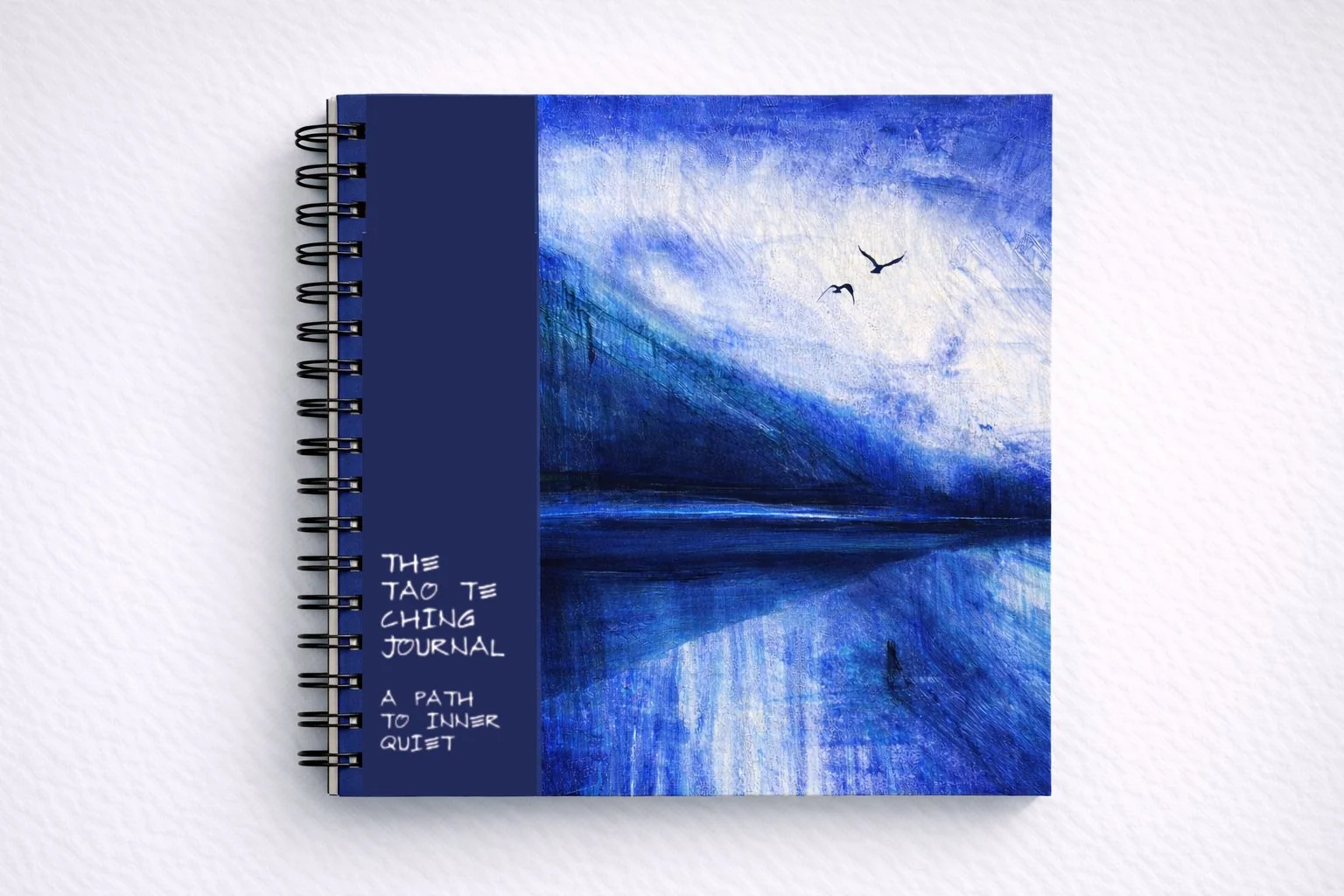
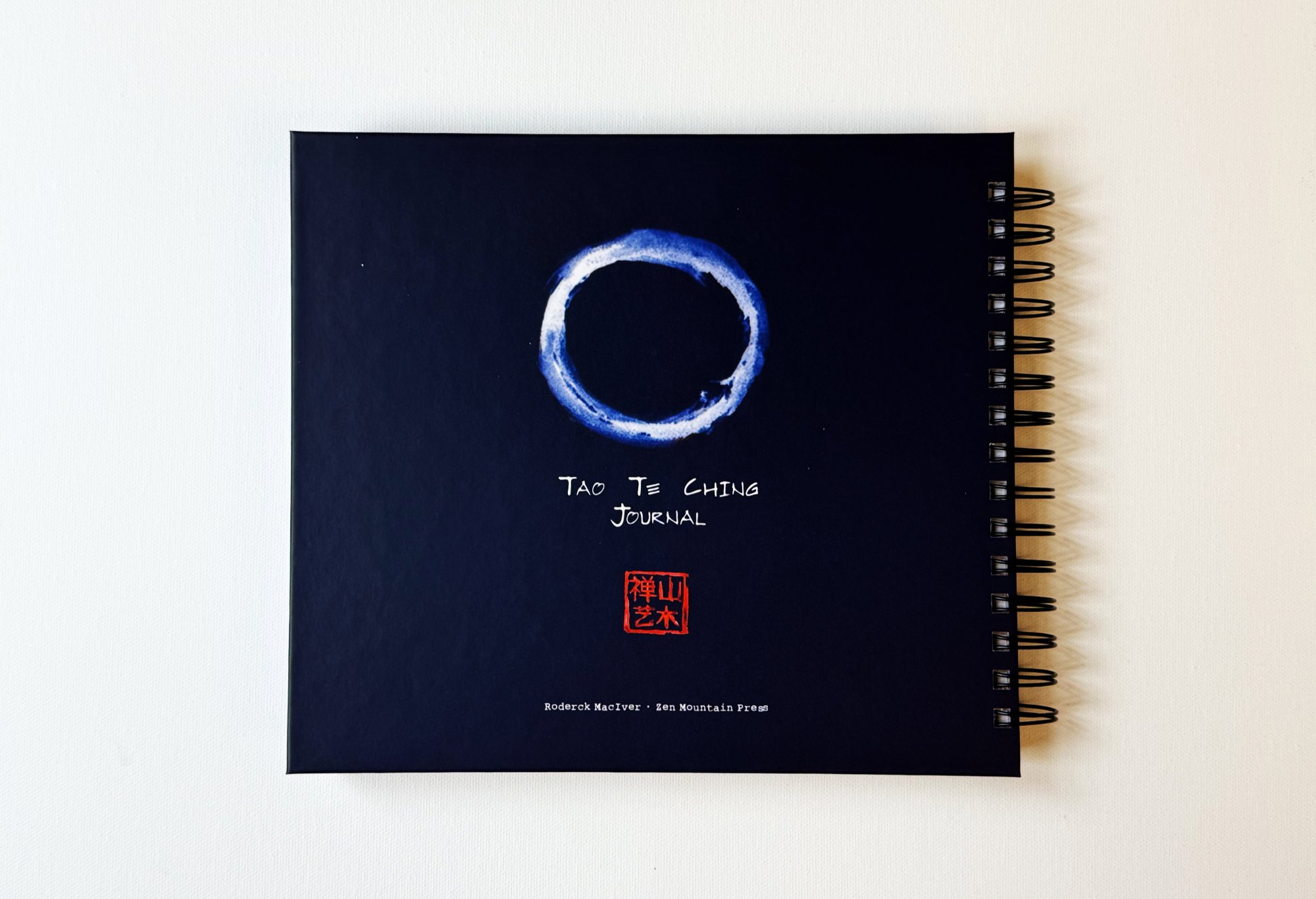
The Tao Te Ching Journal: A Path To Inner Quiet
Zen Mountain Journal blends Taoist hermit poetry, contemplative art, and reflections drawn from a lifetime shaped by wilderness, solitude, and decades doing creative work on the outer boundaries of our culture. These journals are companions for seekers — guides in the reconnection with inner quiet, beauty, and the “soundless music” of a life lived with simplicity and meaning.
• Size: 9.25 × 8.5 inches — convenient size for desk or lap.
• Hardcover — the book can be written in without a table or desk.
• Double wire-o bound to lay flat.
• Printed on Mohawk Superfine, a premium uncoated paper for a beautiful writing surface.
• 160 pages.
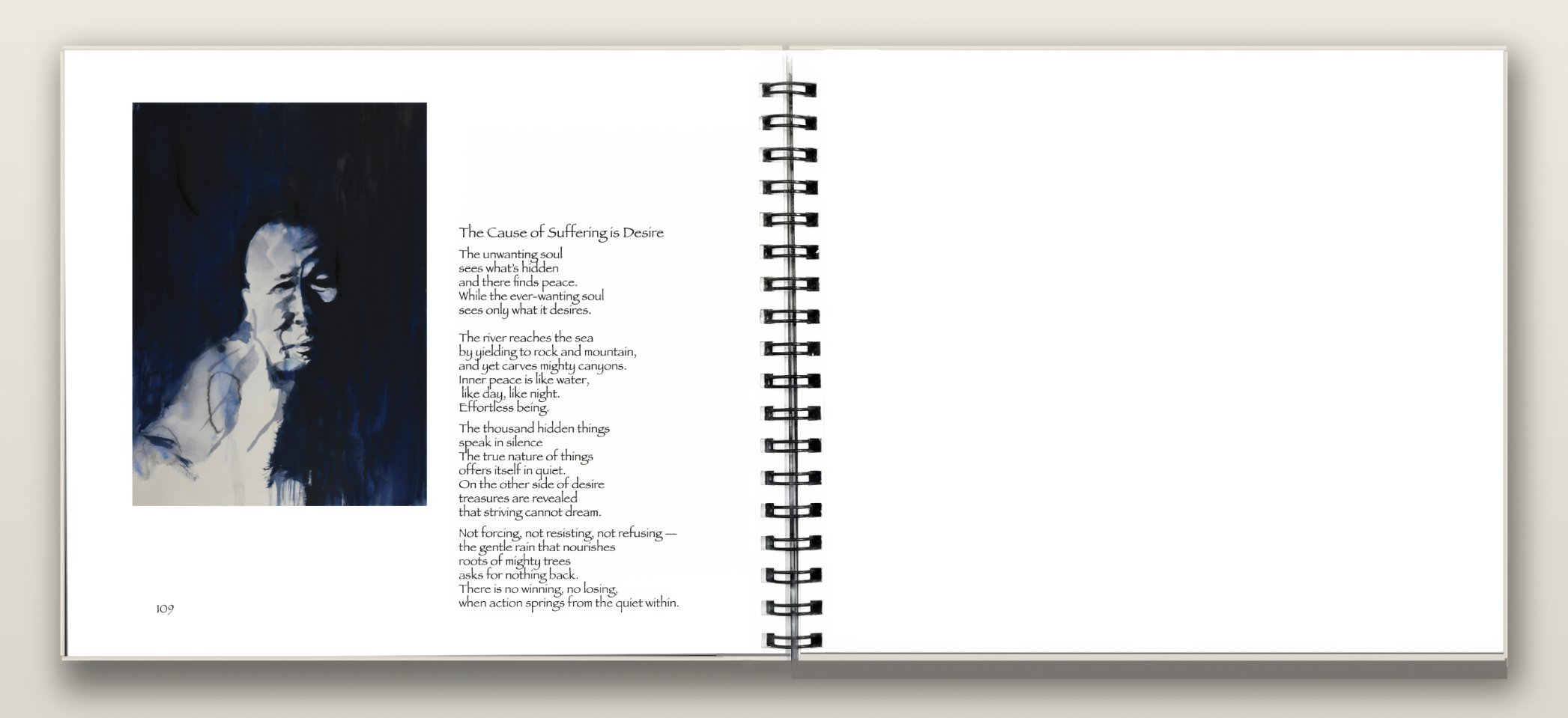
Zen Buddhism resulted from the encounter between Buddhism from India and Taoism from northern China. Poetry was an important part of the tradition of the Taoist hermit monks of the Zhongnan Mountains. The Tao Te Ching is the best known of those poems but there were thousands of others written over two thousand years ago. Many are as beautiful and mysterious as the Tao.
Zen Mountain Journal also draws from the poetry of the Zen Buddhist monks of old Japan.
Zen Mountain Journal offers a Taoist journaling practice for those who seek to connect with inner worlds, with the deep silence and peace within. The poems and paintings in these posts are part of a journal now being created by Heron Dance Press. It will be available for preorder shortly.
The Zen Mountain Journal is reader supported but there is no obligation to contribute. If you would be willing to contribute, please do that here.